Saturday, September 30, 2006

I told you Malaysia has to tighten up religious conversion!

Don't say I never tell you. Didn't I say that Malaysia needed to tighten up religious conversion practices in order to avoid incidents like the one below? Read my previous blog here.

Applying the principles I mentioned in my blog to the case below, the conversion should be declared invalid. Both the illegally converted father and his even more illegally converted son should revert to their previous religions and remain subject to the civil court.

The father had no right to do the following:

  • unilaterally end his marriage to his non-Muslim wife by converting without divorcing her first.
  • unilaterally convert his son without the express agreement of his wife.
Instead, we see the civil court displaying its spinelessness for all to see again. Abdicating it's duty and powers so that it is not embroiled in another religious law dispute with the syariah court. I hope to god... any god... yours or mine, that the Appeals court has more common sense and more courage.

And wherefore is the responsibility and common sense of the religious authorities?
  • How could they accept the conversion of a man who is still married to a non-Muslim wife?
  • How could they accept the conversion of a child when they knew that the child's mother still had custody of the child and had not given her agreement?
  • How could they not see that this was a blatant and audacious attempt for an irresponsible man to gain custody of his children from an enstranged spouse by manipulating and mocking Islam?
  • How can they now, let him get away with it?
In the interest of fairness to all parties (the allegedly Muslim father, the non-Muslim mother and the poor children), this case needs to decided in a civil court. And once the court has made it's decision, the father can always convert again (... properly this time, do you hear, Jabatan Agama Islam?).

Wouldn't this be a better indication of his sincerity toward Islam? When there are no extraneous factors that might pose undue corruption to his decision to embrace Islam eg. in order to manipulate Islam and the Syariah court to wrest custody of the "muslim" children from his non-muslim wife?

Below are the excerpts from the article in NST online in order to give you some background to the case:
A Hindu businessman who converted to Islam has been given the green light to have his civil marriage dissolved at the Syariah Court to obtain custody of his three-year-old son.

Mohd Harris Ibrahim, who is also representing Subashini, said Aziah’s decision revolved around the jurisdiction of the civil court and the Syariah Court. "We are waiting for the judicial commissioner to come out with a written judgment."

The couple were married on July 26, 2001, and have two sons, Dharvin Joshua, 3, and one-year-old Sharvind.

Shafi, who was known as T. Saravanan, and his son Muhammad Shazrul Dharvin Muhammad Shafi (Dharvin Joshua) embraced Islam on May 18 this year.

The following month, Shafi started proceedings to dissolve the marriage and obtain custody of Shazrul.

Faith, Riots and (Un)Reason

This is an interesting article about how many in the Muslim world seemingly over-react to every provocation (real or perceived) against Islam.

To quote the article...

"It seems that some Muslims' stock response to the slightest provocation consists of death threats and violent demonstrations".

Non-muslims honestly cannot fathom the reason for this consistent 'over-reaction' to provocations that they (non-Muslims) wouldn't think twice to brush off as merely an annoyance and inconsequential at the end of the day.

The article tries to answer why.

I would have liked the article much better if it also explored why the self-confessed "moderate" Muslim on the street tends to 'under-react' to the extremist elements within the faith. Whether it's true they fear that in being truly "moderate", they might be perceived as not Muslim enough?

Lesson 101: How to Justify Racial Discrimination.

"Poor people are to politicians" what "Cute puppies are to young men".

Poor people help politicians get money and puppies help young men get pussy.

PUPPIES:

1. It's proven fact that women are invariably attracted to small cuddly cute animals like puppies. Young men are invariably horny.

2. Puppies lower women's suspicion towards their owners and give them an excuse to chat those women up.

3. It's statistically proven by Hollywood movies and television that young men who own puppies get into the panties of substantially more attractive women than men who don't have puppies.

4. And the puppy is only effective as long as it stays small, cute and cuddly.

POOR PEOPLE:

1. Money in the form of aid, welfare and AFFIRMATIVE ACTION are invariably drawn to Poor People. And politicians are invariably greedy, as are their cronies.

2. Poor People provide a rock solid EXCUSE for politicians to channel public money into "affirmative action" programs like NEP (NEarly aPartheid). And anyone who complains about these programs are automatically Rich People who don't like Poor People.

Never mind that nobody ever accounts for exactly how much of NEP's benefits actually reach the Poor People it was intended for, and where the rest of it went.

3. In the particular situation of Malaysia, Poor People mainly come from a certain Race. Which a bonus for the politicians, as it allows them to play the race card as well.

Race gives added weight to the EXCUSE as it allows them to paint an ogrish picture of Rich People as being entirely of a certain race ie. Chinese - and who are trying to oppress the Poor People (conveniently portrayed as being entirely of another race ie. Malays).

Malaysia justifies it's NEP (NEarly aPartheid) by saying that 9 out the 10 richest people in Malaysia are Chinese.

Indonesia does the same by saying the 5 richest people in Indonesia are Chinese, as well as the majority of the top 40.

Never mind that there are rich Malays and poor Chinese as well. And let's not forget the poor Indians. (see: sean-the-man's NEW NEP).

Isn't it possible that rich Chinese are carefully cultivated by politicians, so that the exact excuse above can be used? Think about it... maintain a few rich Chinese indefinitely and you have a perpetual excuse to make the rest of the Chinese population bend over? That sounds like a damn good plan to me.

4. Poor People are an effective excuse for "affirmative action", only as long as they remain poor. So in sean-the-man's NEW NEP, I suggested that it is crucial for the poor Malays to remain poor in order to JUSTIFY the EXCUSE for the NEP (NEarly aPartheid) to continue indefinitely.

Despite almost 40 years of NEP, we still have the millions of poor rural Malays who remained poor. And we have the small crop of Malay elites who have enriched themselves tremendously using the same NEP. Might the rural Malays be better served by directing their frustration towards these rich elites who have monopolised the benefits of the NEP (which was supposed to serve the poor)?

OTHER PEOPLE:

And it's interesting as well to note that sometimes politicians think with a certain warped wormhole parallel space continuum logic that is completely illogical.

In response to Singapore MM Lee Kuan Yew's recent comments about Chinese marginalisation in Malaysia and Indonesia, Malaysian politicians and pro-govt press have been returning fire by saying that the Malays in Singapore have been marginalised as well.

Errrr... SO WHAT?! What has that got to do with us?

All that means is that Singapore might be guilty of marginalising it's Malays. But it has no impact whatsoever on Malaysia marginalising it's Chinese!

Or does it? Could these people be suggesting the Malaysia is entitled to marginalise it's Chinese because Singapore is marginalising it's Malays?

Whatever happened to "Learn the Best. Discard the Rest"?

IN CONCLUSION:

Focus on the solution. Stop focusing your energies on finding fault, justifying mistakes and bad policies. If you're looking for suggestions on how to put things right, here's one that just might work!

Monday, September 25, 2006

sean-the-man's NEW NEP! Is it palatable to all?

Unless you've been living in a tree, you must have seen by now the furore created by Singapore's Minister Mentor (MM) Lee Kuan Yew's comments about Chinese being marginalised in Malaysia and Indonesia. Below's the quote from the local press.

In response to a question, MM Lee said it was important for Singapore to have a government that was 'really firm, stout-hearted, subtle and resolute', noting that the attitude of Malaysia and Indonesia towards the Republic was shaped by the way they treated their own ethnic Chinese minorities.

Mr Lee said: 'My neighbours both have problems with their Chinese. They are successful, they're hard-working and therefore they are systematically marginalised, even in education.

'And they want Singapore, to put it simply, to be like their Chinese, compliant.'
Rather than debate if the Chinese are indeed compliant & marginalised or whether the Chinese are the ones marginalising the Malays (as some believe), why don't we get past all that. Head straight for a solution, rather than get bogged down debating the symptoms.

To follow up sean-the-man's solution to conflicts between Islamic and civil law in Malaysia, here's sean-the-man's solution to an equally difficult NEP (New Economic Policy).

This was actually authored in 2 posts in the Ipoh forums stemming from discussion about this subject.

Post #1:

Let me put down my thoughts. It's a long post, but this is an overwhelming issue.

>>>> 1. All Malays are poor, uneducated and have no stake in the economy. All Chinese are rich, highly educated and own the economy.

Rubbish!

It's very true that the overwhelming % of the impoverished in our country are Malays. These are the rural folks that despite their most valiant efforts to plant crops and sell their homemade wares, they remain poor and marginalised. But there are also the Datuk Ks, Datuk Rs, the top bureaucrats & civil servants, most the CEOs, CFOs and boards of virtually all listed companies and regulatory bodies in Malaysia and of course the political & royal elite - who are all rich by any definition. And there is also a substantial Malay middle class in the West Coast cities.

And are all Chinese rich? Stop conjuring pictures of the Lim Goh Tongs and YTLs... look past that at the new villages. How many Chinese there have houses larger than Mahathir's? Admittedly, there is a considerably higher % of Chinese in the middle class. In fact the majority of Chinese are middle class, but hardly rich. At least no middle class Chinese person I know, is rich enough to own a house bigger than Mahathir's.

So, what does this mean? It means that stereotyping the problem is wrong. It's inaccurate and it does not recognise the fact that there are rich Malays who don't need any help (in fact, they should be helping others) and there are poor Chinese who do need help.

This leads to a flawed solution ie. the NEP and other 'racial' policies.

>>>> 2. The Chinese intentionally marginalise the Malays in business and employment.

Do Chinese businessmen and employers go out of their way not to do business with and hire Malays? Well, it may seem like that to some, but personally, I have NEVER, EVER seen a Chinaman who makes a bad business decision simply because he wants to deal with another Chinaman.

The thinking that the Chinaman refuses to do business with or hire a Malay is a fallacy.

The Chinese businessman is a slave to PROFIT. If there is no profit, he simply will not do business with you. But show him the profit, and he'll jump on it faster than Datuk K on Siti Norhaliza.

If you didn't get hired or didn't get the contract, there is an economic reason for it.

Since gemukkk brought up employment... let's have a look at it. What does it take to get one hired by a Chinese company?

A- technical skills - education, training and experience to actually do the job.
B- language skills - can you communicate effectively with the boss, co-workers and customers?
C- social skills - can you get along with the boss, co-workers and customers?
D- incentive - are you working to put food on the table, or are you working like you don't need money?

Take an example: A company that sells pesticide needs to hire a marketing dude. 2 applicants apply. A Malay and a Chinese. Both have the same technical skills (A) and same incentive (D)... assume for a moment that the Malay chap has a mistake on his IC and somehow doesn't qualify for any govt jobs, class F contracts or ASN/ASB. So he has as strong an incentive to put food on the table for his family.

Who will the pesticide company hire?

Actually both! The Chinese dude will be hired because he can speak Mandarin to the mainly Mandarin speaking agriculture dealers and distributors over a bottle of brandy at a Chinese restaurant.

The Malay dude will be hired because he's in his element dealing with the 100% Malay constituency at Felda, Felcra, Bernas and Jabatan Pertanian etc.

Is this fact... YES. And it illustrates the fact that business relationships are themselves are racially segregated by societal factors. It's not necessarily the intention of the Chinese business to marginalise Malays.

Is this right... NO.

Can the NEP and racial quotas solve this... sadly, NO. It actually worsens the problem because it causes the abovementioned racial segregation in the first place.

>>>> 3. OK, if it's not because I'm Malay, then what is it?

Qualification, Opportunity and Incentive.

Qualifications are A- technical skills and B- language skills.
Opportunity are B- language skills and C- social skills
Incentive is simply D- incentive.

You generally find that the impoverished rural Malay lacks Qualifications. This is the very basic element that's missing. Without it, you don't have a ticket to play. You can't get a decent job and probably won't succeed at business since nobody will give you capital. Even if you had capital, you will not be equipped to manage it well. And because he can't afford to educate his kids, they will be stuck in this spiral as well with their kids. Qualification or Education is the first thing that needs to be remedied.

Opportunity comes from society. How much opportunity do all the races have to work together? How much opportunity is there for the various races get to know one another and get a sense of common destiny? How can we detach race from our business and social practices?

A little acknowledged by-product of 49 years of 'bumi'policies and NEP is that these policies have segregated our society so badly that there is entirely no or very little opportunity for the various races to cooperate at the everyday, joe-on-the-street level.

Govt policies and propaganda has resulted in the entirely Malay civil service, a totally race-segregated schooling system, a crop of Malay companies totally dependent on govt contracts and handouts, Chinese small & medium businesses congregating in industries which remain hereto free from NEP encroachment - forming natural barriers to entry for everyone else, a totally arbitrary system of licensing, contracting and naming of key positions. Has that not engendered a deep distrust and bitterness between Malaysians of different races? Just look at the last few comments above by our forummers. Didn't those sound a little sharp to you??

Without removing race from the social, business and economic environment, Malays will still be concentrated in the civil service and 'assisted' industries. Chinese will still be in their own little strongholds. No cross hiring will occur as everybody's in their own little world. Even if there is, it will tinged with quotas and the witholding of approvals which only serves to deepen the chasm, rather than narrow the divide.

Incentive is easy. How badly do you need to learn new skills and work hard? The underlying aspect of utilising your Qualifications and grabbing Opportunities is INCENTIVE / MOTIVATION / DESIRE. Tell me, how do Proton suppliers learn anything when they know that substandard products will always be accepted because Proton can ship bad cars but cannot terminate bad suppliers? How do Class F contractors learn anything when they know that payment is assured and the next contract is always pending? Do they value the opportunity of govt aid or do they feel an entitlement to govt handouts?

>>>> 4. Then How?

At the end of the day, what's the real problem?

The poor are staying poor, and the rich are getting richer. And this basic problem is being misperceived as a racial issue by a lack of interaction / understanding between the races, and the goading of the beneficiaries of this misperception.

The solution is quite simple actually. But the barriers will be those who benefit the most from the current dire situation (who happen to be the leaders of men and captains of industry) and engrained prejudices inherent in all of us.

Just discard all the racial targets. Replace them with non-race based socio-economic targets. For example:

(a) Instead of elevating bumis indiscriminately, elevate all Malaysians above the poverty line instead.If there are many Malays lying under the poverty line, then this measure will automatically capture them. Open cheap housing, welfare aid etc to all households below the poverty line.
(b) Instead of 30% bumi shareholding, have 30% of shares allocated to households below a certain income. No nominees allowed and apply a ceiling per capita. If only low income Malaysians can buy these shares, there's no danger of any rich Chinese or Malays buying up these shares in the guise of someone poorer.
(c) Instead of 30% bumi employment, have a target that all companies in Malaysia must not employ more than 60% from a single race. Applicable to all incorporated organisations and the govt. Have large tax breaks for companies meeting or exceeding these targets. Businesses can do so if they want to keep their single-race structure intact. Accordingly, they just get taxed more.
(d) Instead of racial education quotas, have compulsory and publicly funded secondary/tertiary schooling for children in all low income households.
(e) Instead of creating a bumi middle class, create a Malaysia-wide middle class. If there are many Malays lying outside the middle class, then this measure will automatically capture them.
(f) Eliminate the creation of bumi superbusinessmen. Superentrepreneurs like Lim Goh Tong and YTL are self made. It is their internal drive and determination that enables them to continue being successful. Govt made supermen like Tajuddin, relatives of each political head honcho et al are unable to be self reliant, sucking billions of public funds.

The best things about using socio-economic means-tested targets are twofold:

(1) The rich cannot use these policies to get richer. Once they leave the socio-economic class assisted by the policies, they are no longer eligible. And it's much more difficult for the powerful to "misadminister" these policies to enrich themselves and their cronies. There will be no more millionaire Datuks getting concessions leading them to be billionaires without raising a sweat. No more bumi discounts to millionaire multiple houseowners.

(2) The crutch mentality will disappear. Once your economic status forces you to leave the ambit of the policies, you're on your own. NO FREE LUNCH once you're able. You'll have to work and earn your living just like everyone else. You lose sleep, but you gain pride and respect.
Nobody has problems helping the disadvantaged. And non-race based targets will ensure only the deserving get assistance.

I also feel the schooling system needs to be revamped to draw Malaysians closer to each other.

(a) No more venacular Chinese or Tamil schools, Malay boarding schools or MARA junior colleges.
(b) All Malaysian children attend National Schools. The Vision schools were a good idea.
(c) All subjects to be taught in BM and English.
(d) All Mandarin, Tamil and religious classes can only be taught AFTER a full day's "regular" classes and to be fully funded by the schools.
(e) Teachers and the Education Dept will be the first govt department to be revamped to make sure the composition of teachers and officials is balanced.
(f) Instead of a Higher Education and an Education Minister, there will be 3 Education Ministers of the same rank (one of each race or something to that effect) each with veto power that cannot be overwritten even by the PM, unless by a 2/3rds majority in parliament. The Party Whip does not apply to MPs when voting on education bills.

Have a read of the last part (#4) of my post above.

1. Mechanically, will that work? Will affirmative action based on a person's economic disadvantage work better than that based on race? More importantly, will it address the grievances of the Malay community at large?

2. Emotionally, will that concept appeal to fair-minded Malays like yourselves?

And if these suggestions are implemented:

The majority of the Chinese (who are middle class) will probably not see any extra benefits or change to their current situation. That's because they probably won't qualify for any help due to their current economic advantage. The poor Chinese on the other hand will see a brighter future.

The Malays will see no change or even increases in the total amount of assistance going into their community. But one huge difference will be where that assistance is going. It'll be going towards the provision of economic opportunities through education to move the lower income group to middle class. It will be going to financial aid to the impoverished to move them above the poverty line.

The objective will not be to make SELECTED Malays rich OVERNIGHT, but to enable the entire population of Malaysia, through education, to ENRICH THEMSELVES. It also conveniently eliminates the current group of politicians, businessmen and others who enjoy CRONY status (which is a status better than any bumi designation).

The target is to create a MIDDLE CLASS Malaysia. Not a Malaysia where super-rich Malays are artificially manufactured by the govt to match super-rich Chinese (who are being encouraged by the same govt... how else can they justify the continued production of super-rich Malays?).

During all this, the Malay elite work hard to maintain the economic status quo. The average Malay must remain a poor rural cousin (don't the elite need excuses to make impassioned speeches and to wave kerises around during general assemblies?). Tidbits are handed out here and there, just enough to keep them sufficiently angry at the Chinese but not boiling over.

The average Chinese, in the meantime, pays his 28% taxes and sees it all going into creating super-rich Malay businessmen and maintaining super-rich Chinese ones.

EVERYONE should be middle class. If anyone is below middle class, he should be helped to get there, regardless of race. The rich of course will try their best to stay rich (as they are wont to do), but they will have to do so on their own steam.

Chicken and egg?

When everyone are middle class (ie. comfortable and making a decent living) or are on the way to being middle class; and when they are not disadvantaged somehow simply because of the circumstances in which they were born... - I feel that the chicken and egg disappears. Add on the schooling changes that were listed, the relationship between races might just take a turn for the better.

Thursday, September 14, 2006

Zoe Tay's Secret to Beautiful Skin? She Swallows.

Initially when I saw this ad in the newspaper, I couldn't help a double take. Wasn't quite sure if I had read it wrongly.

The handwriting text on the picture says:
"My secret to beautiful skin? I swallow".
Zoe Tay.
ZOE, YOU'RE MY KINDA GIRL!!!

I hope it puts an end to the primal question that has plagued mankind since the dawn of time. SPIT OR SWALLOW? Take it from me, baby... listen to Zoe. Swallow, everything also must swallow.


Here's the latest Imedeen print ad that I've seen (20 Oct 06). And yup, you've guessed it. No more swallowing. Either Zoe's had a last minute English lesson or she's found a better way to keep her skin smooth. ATM or scat, ya reckon?

Saturday, September 02, 2006

The Importance of the word "IF". Jasin MP Mohd Said's SMSes.

By now, everyone who's not a total recluse has heard about the 2 "threatening" SMSes that Jasin MP Datuk Mohd Said Yusof sent to Customs Director Adnan Ariffin. The latter has lodged a police report and Mohd Said has admitted to sending the two SMSes.

Full article here

Here's the first SMS as quoted by NST:

"Ass kum, ji. Kau nak ajak berjumpa, SiRomainor d mka tak habis habis mencari pasal dgn co aku. Kalau ni berterusan jangan marah kalau aku bangkitkan hal2 Kastam lagi. TQ."

("Peace be upon you, Haji. You want to invite me to meet up. Romainor in Malacca is continuously finding fault with my company. If this continues, don’t be angry if I continue to raise Customs issues. Thank you.") - Translation by NST.
Rumainor Sarif is the Malacca Customs preventive chief who refused to accede to Mohd Said’s request to " close one eye" over a consignment of logs belonging to a company for which Mohd Said’s firm served as a forwarding agent.

Everybody's harping on this sms as being "threatening" and "intimidating". But is it?!

I've got a different view of this.

Mohd Said "threatened" to raise Customs issues (in parliament). To me, how can this be a threat?! If the Customs Dept is guilty of any impropriety, Mohd Said (as a MP and law abiding citizen) has a civic and legal obligation raise this issue if he has any knowledge of it. He must make a police report or inform the ACA.

Actually, the problem with this sms, is not the "raising of the issue". The problem is the OPTION that Mohd Said offered (to the Customs Director) NOT TO RAISE the issue.

Read the SMS again. Does it not say that IF Romainor continues to find fault with his company, then... Mohd Said will continue to raise Customs issues?

Does that not mean that IF Romainor stops finding fault with his company, then... Mohd Said will stop raising the said issues?

Does that not sound like an offer of an inducement to the Customs director by Mohd Said to stop action being taken against his company? I'm not a lawyer nor am I a policeman. But it sure as hell sounds illegal to a layman like me. I don't want to use the C word without proof, but this absolutely reeks of it. Quit Pro Quo. You scratch my back, I'll scratch yours.

Could this be why Mohd Said has steadfastly refused to report his "knowledge" of the "customs issues" to the ACA or Police? Because once you do that, you lose the option, the "IF" to "raise the issue".

The second SMS as quoted by NST:
"Assalamualaikum Haji. Sejak saya berniaga di Pelabuhan Melaka, hari ini baru saya jumpa kes bawa kayu besar sikit anak s/motor Indon masuk lokap. Tahniahlah, bahagian pencegahan. TQ."

("Peace be upon you, Haji. Since operating my business at the Malacca Port, this is the first time I have come across a case where Indonesian crew carrying big logs are thrown in jail. Congratulations, prevention division. Thank you.") - Translation by NST.
Sent by him two days after three Indonesians were arrested for allegedly ferrying an illegal consignment of logs to Malacca.

Here, nothing quite as bad as the first sms besides the obvious sarcasm. But NST's translation is a little lacking. The part of SMS which says "bawa kayu besar sikit" is translated as "carrying big logs". This is not entirely correct. It should be translated as "carrying logs which were a little too big" (there are customs regulations prohibiting the import of logs exceeding a certain size).

Again, I'm not making any accusations, since I don't have proof. I'm just testing my grasp of Bahasa Malaysia and making my observations as a concerned layman.

Does it sound to you like Mohd Said said that "it's the first time he's run into a case where Indonesian crewmen were locked up because the logs were a little too big"?

If it sounds like that to you... does the statement imply that:

(A) Mohd Said feels that it is IMPROPER for the Customs Dept to detain the Indonesian crew for logs which exceed the allowable size ie. ILLEGAL?

Assuming that the Customs Dept's standard operating procedures prescribe detainment of crew if violations of such regulations are detected... wouldn't that mean that Mohd Said reckons that CERTAIN ILLEGAL ACTIVITIES should not be enforced against? Or does he mean that enforcement should carried out, but just not against his company?

OR

(B) Has the Customs Dept been ignoring such violations and illegal activities all along? Hence, Mohd Said's surprise that enforcement had "suddenly" been carried out? If so, why hasn't Mohd Said made the proper reports and disclosure of the dept's failure to discharge their duties, to the ACA and Police?

Mind you, everyone, that Mohd Said is a MP. I don't know about you, but to me, MPs are leaders of the people and elected to do a noble duty. As such, they should be held to higher ethical standards and quality of conduct, compared to the average Joe. When I read about his antics in the newspapers, it just seems to me like Mohd Said thinks the opposite is true.

Thursday, August 31, 2006

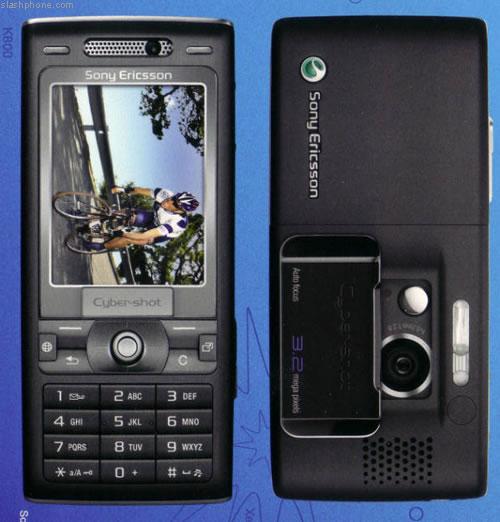
Review: SonyEricsson K800i Cybershot

Like I mentioned in an earlier blog, I bought a new phone a couple of weeks ago. It's the SonyEricsson K800i. For a full list of specs, go to www.sonyericsson.com.

It's your everyday 3G phone (video calls), plays MP3s, MP4s, FM radio, Java applications and games, about 68MB of free phone memory (out of the box), a Sony Micro M2 memory card slot and a full featured personal assistant. Nothing special about the phone specs.

PROs:

It's got a big screen with very, very high resolution. At least as good as the later N series phones or PDAs, if not better.

The 3.2 megapixel autofocus camera is excellent. Lots of people have been raving about the Cybershot branding and my feeling is that it's not undeserving of the praise. It has the best flash for a cameraphone yet. A real xenon flash, same as those used in regular cameras instead of the usual LED flash.

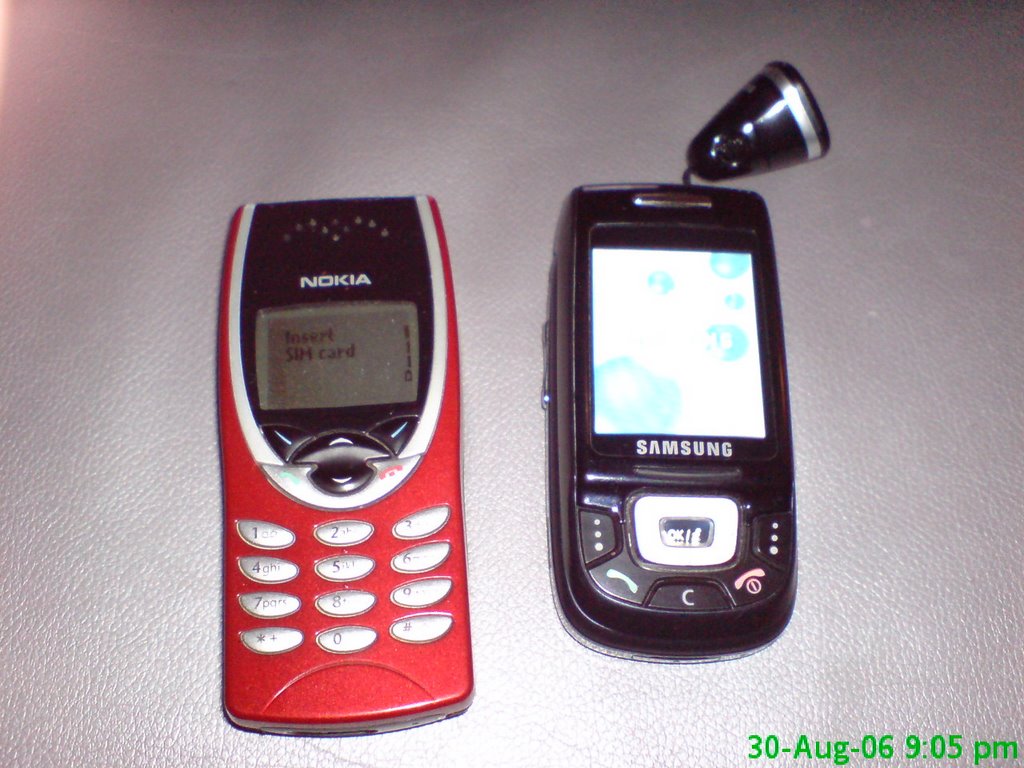
The 1st picture is of my 2 previous phones, taken at 1 megapixel resolution using the K800i - in a darkened room with flash. The next picture is the K800i, taken at 1 megapixel resolution using the Samsung D500C - in the same room with flash. Huge difference in quality.
CONS:

The big superb screen, xenon flash and autofocus camera does have its drawbacks. Firstly it's a porker at 115gms. My Nokia 8210 and Samsung D500C are about 80gms each. Makes a huge noticeable difference sliding around in your shirt pocket.

Secondly, the life of the 900mA battery is horrendous. With heavy use, be prepared to recharge daily. Used like a normal phone with occasional photoes, mp3, games etc, you'll be doing well if you squeeze ~2-3 days from it. If you're thinking about using a 2nd battery, forget about it. The battery cover is so tight that I've not managed to remove it since I bought the damn phone (the sales chick put my simcard in for me).

But the smart charging (controlled by the phone's software) is good. It charges very rapidly initially (confirmed by a travel charger that becomes hot to the touch) and only takes about 15 minutes to reach 50%. Then it cools off (literally), taking another 1.5-2 hours to fully charge.

Then you have the proprietry Sony Micro M2 memory card. It's brand new in the market, and like all new stuff and being Sony, it's expensive as hell. About USD 100 for 512MB and the 1GB card is not even available yet.

Lastly, the phone doesn't seem as robust (in a touchy feely sense) as my other phones. In just 2 weeks of usage, I've managed to scratch the screen (no friggin idea how that happened, but I've now pasted a plastic screen protector on it) and my thumbnail somehow managed to delaminate the top layer on one of the soft keys (#5) during an intense game of Java tennis. Now the key has sort of a 'blister' on it. And although the build quality is excellent, you'd really don't want to drop it on the floor. I just don't think it'll survive, but I might be wrong since this is my first SonyEricsson.

OVERALL:

I still love the phone. The camera is priceless, especially for someone like me who flatly refuses to pocket both a phone and a camera. I've been taking fuzzy pictures or none at all for years due to my stubbornness. No more, with the K800i's excellent camera.

A plus point is that there's very little delay between pressing the button and the shutter activation. Almost as fast as a normal digital camera and wayyyyy, wayyyyyy faster than the D500C and any N series I've tested. You also get the Bestpic functionality (which takes 9 photos in rapid succession) and sport mode for taking quick pictures. Auto focus and one button adjustment for landscapes, portraits, night shots, documents etc make it really user friendly.

If you can't make up your mind, here's a review comparing the K800i with other 3.2 or above megapixel phones, N73, Samsung D900, LG KG920 plus the newest N93 which is marketed as a Videocam-phone.

Also, here's an interesting comparison between a 3.2mp K800i with 2 "regular" cameras with typical huge megapixels - a 8mp and a 12mp Canon.

Finally here's a pic of the chickadee who sold me the phone at Carrefour Hypermarket. Taken with a K800i held by sweaty hands, at 3 megapixel resolution, with donno what settings right out of the box.


Sunday, August 20, 2006

Challenging times for the towkays

Recently, Chinese businessmen met Prime Minister Datuk Seri Abdullah Ahmad Badawi about the economy. Foremost on their minds were, of course, the NEP and the targets set for bumiputra participation in the economy.

In my opinion, the NEP obssesses too much on the objectives (for eg. 30% of equity belonging to bumis, 1 bumi businessman for every 1.5 Chinese ones etc), but pay scant attention on how to meet those objectives.

For almost 40 years, the govt seemed to think that if you threw enough money at the bumis, they will learn, learn to uplift themselves and learn to succeed. But what has that thinking left us? Tun Mahathir was the first to despair that the bumis had largely failed to reap the benefits the affirmative policies had intended.

Here's my thinking why the policies and a trillion ringgit over 40 years have failed to bear fruit.

Simple... it's a mistaken link that at a communal level, OPPORTUNITY and RESOURCES equals PROGRESS. What's painfully missing is the element of LEARNING, or more specifically the MOTIVATION and INCENTIVE to learn.

It's like fishing. Give the man a fish, you feed him for a day. Teach a man to fish, you feed him for a lifetime.

What we've been doing for the past 40 years, is throwing fish at someone in the hopes that they somehow learn to fish. What we've ended up with are people addicted to fish, but with no fishing rod.

So, how do you make him learn? How do you incentivise and motivate him to learn to fish?

Instead of giving him a fish, give him a piece of bamboo instead and point out where the nearest pond is. And most importantly, make sure he starves if he doesn't turn the bamboo into a rod and catch some fish. And after he learns to fish, show him how to grow bamboo and give him directions to the ocean.

Below are some excerpts from the relevant article. The complete article is here

Opinion: Challenging times for the towkays
20 Aug 2006 Chow Kum Hor

But this time, Heng says, domestic policies also add to the disquiet among Chinese businessmen. One is a numerical target contained in the 9MP. Unlike previous plans, the current five-year national economic blueprint has set out to reduce the income disparity ratio between Bumiputera and Chinese as well as between Bumiputera and Indians.

The Government wants to reduce the Bumiputera-Chinese ratio from 1:1.64 in 2004 to 1:1.5 by the end of the Plan period in 2010.

Heng calls this "NEP-Plus" — an added target to the two-pronged NEP goal of poverty eradication and economic restructuring.

Although the 9MP does not spell out how this will be done, she believes one way is through the "Guidelines on Foreign Participation in the Distributive Trade Services".

Under the 2004 guidelines, all wholesalers, retailers and specialty stores with a foreign stake must have at least 30 per cent Bumiputera equity. These businesses must also raise their paid-up capital to RM1 million and ensure that their staff reflects the country’s racial composition.

"If implemented strictly, it will kill a lot of start-ups," says Dr Jeffery Goh, the Cheras MCA service centre director. "Many companies in the retail industry form alliances with foreign partners to acquire technology and rights. "These guidelines will be counter-productive in a globalised economy."

He estimates that 90 per cent of retail businesses are owned by non-Bumiputeras.

Fong says the Cabinet is also reviewing the controversial Distributive Trade Services Guidelines. "It’s not the Prime Minister’s intention to rob Peter to pay Paul.

"You can ask the developer of a condominium project to allocate 30 per cent of the units to Bumiputera buyers. "But it is not fair to build a bungalow and say that 30 per cent of the rooms should be occupied by Bumiputeras."

All in all, Fong says, Chinese businessmen in the country have shown resilience in overcoming economic difficulties over the years. This time, too, it should not be any different.

Let’s all pray together, says Aziz.

Let’s all pray together, says Aziz

JOHOR BARU: Muslims and non-Muslims should pray together at the beginning of public functions.

“The person leading the Muslim prayers should ask the non-Muslims to pray according to their respective religions,” said Rural Development Minister Datuk Seri Abdul Aziz Shamsuddin.

“Christians, Buddhists and Hindus have their own prayers. When we (Muslims) are praying, they can pray, too. Let us all pray together for the good of the country. All prayers are good. We do not want anybody to feel left out during prayers,” he said.
For the rest of the article, go here

Now that's an idea. I always wondered what to do with my hands, should I close my eyes, or look at the ground, or look at the sky? - when doa(s) were being recited during "official" gatherings etc.

But won't allowing "kafir" religions into official functions "undermine" the status of Islam as the country's official religion?

And won't simply acknowledging the existence of "other" religions somehow, however inperceptibly, damage someone's akidah, as Islamist are wont to claim?

Saturday, August 19, 2006

What's become of Malaysian universities?

I just bought a new hand phone last evening after work. And it was EXPENSIVE! RM1700 to be exact. A new Sony Ericsson K800i Cybershot. Cool 3G phone with a 3.2 megapixel Sony Cybershot camera that was launched not more than a month ago.

It's downright expensive and practically wiped out my savings for last few months. And I already have a phone. More than a few, actually. But hey, I'm young, work damn hard to earn a commensurate salary and I need to enjoy life, don't I? I've got corporate life and medical insurance, some investments and a little bit saved up for rainy days... what else can I do with my money?

Since I don't gamble, drink or fool around (plump little chinamen tend to get less pussy, for some reason ;p), I buy stuff. Since I started working, I've buying stuff non-stop. Cars and car parts to modify it, laptop computers, handphones, game consoles, games, DVDs, VCDs, CDs, gadgets and other nifty electronic doohickies.

So, if you ask, where's my savings? Well, I don't have any. I've spent it all already.

And what does my lack of savings have to do with the state of Malaysian universities? This brings us neatly into today's topic.

Lots of Malaysian Chinese and Indian parents saved religiously so that they could afford to send their kids to universities overseas, or at least, to private tertiary institutes. Why?... we all know about the quota system and unavailability of certain "strategic" courses to non-bumis... so, I won't rehash all that. Bottom line, is that most non-Malay parents had to save up every penny to send their kids to school.

Well, I didn't save up. And I'm still not saving up. Not because I don't have any kids yet (that's just a technicality because someday, a woman sympathetic or gullible enough to bear the fruit of my loins will walk into my life. But that's another story). No, it was because I thought things would change.

Growing up in the roaring optimism of the 1980s and 1990s, and tempered into adulthood by foolish idealism, I just assumed that non-bumi Malaysians would share the same privileges to local universities like our bumi brothers and sisters by the time I had kids of university-going age. I had dreamt that black children, brown children and yellow children would, over the years, learn to truly share the blessed bounty of our country, and gang up on white children to give them a hard time.

Since Pak Lah came into power, meritocracy has been introduced and thankfully, the govt has not backed down from this commitment, despite the reintroduction of the NEP. Sporadic incidents of un-meritocratic nature have cropped up, but they are being addressed - albeit reluctantly by the bureaucratic dinosaurs from the pre-Badawi era.

However, something else in our universities has elbowed itself into the equation. And that's STANDARDS. The standards of our local universities have dropped so much (or have progressed so little - depending on your viewpoint) that it might NOT be the wisest move to send my future kids there, even if they get into the courses they want.

Kit Siang: Shame, not a single M'sian university is of world standard
Husna Yusop

PETALING JAYA, Friday 18 August, 2006: Malaysia was omitted for the fourth consecutive year in the Shanghai Jiao Tong University's Academic Ranking of World Top 500 Universities.

Parliamentary opposition leader Lim Kit Siang said this shows the quest for academic excellence and university quality in the country has again drawn a blank.

"Not a single Malaysian university was listed in this year's ranking although five more universities from the Asia-Pacific region made into the list compared to last year (2005).

Lim said the 92 universities in the Asia-Pacific included in the list come from Japan (32), Australia (16), China (9), South Korea (9), Israel (7), New Zealand (5), China - Taiwan (5), China - Hongkong (5), India (2) and Singapore (2).

UPM ruckus: Students let off with an "advice"
Pauline Puah

KUALA LUMPUR, Aug 18, 2006: The students who caused a ruckus in the Universiti Putra Malaysia (UPM) canteen on July 17 (2006) will be let off with an "advice".

After a three-week probe into the incident, UPM vice-chancellor Prof Dr Nik Mustafa R. Abdullah said the students would only be adviced not to repeat their behaviour.

"We will call the students and advice them that we have to respect each other. This is the university's responsibility to educate them rather than punishing them," he told a packed press conference in the university today.

seantang's note: See! I told you it'd be no more than a slap on the wrist. This type of 'discipline' is a farce!

Shocking!
High degree of sexual promiscuity and ignorance on campus
Shamini Darshni

KUALA LUMPUR, 18 August 2006: They either have no fear or are ignorant. Either way, Malaysia’s best and brightest are flirting with AIDS and death every day, suggests a survey of private colleges and public universities.

One in two young adults are having sex. Unnerving? Try this. Eighty per cent of them do not use contraceptives. Latest figures show that sexually-active university and college students, between the ages of 18 and 25, do not even think about condoms when they hop into the sack.

These are some of the findings.

• One-third (34 per cent) thought condoms cannot help prevent the spread of HIV

• One-fourth said a person could be infected with HIV through a bite from a mosquito, flea or bed bug

• Sixty per cent thought that a man would be able to tell when a woman has STD

• More than half (53 per cent) said a person with STD would show symptoms.

Many respondents had a basic knowledge about sexual and reproductive health but "this did not translate into the right behaviour".
70% of grads from public institutions jobless
B.Suresh Ram

KUALA LUMPUR, July 3, 2006: Some 70% of public universities and institutes of higher learning graduates in the country are unemployed.

This is in contrast with 26% for private institutions of higher learning and 34% for foreign graduates.

Deputy Human Resources Minister Datuk Abdul Rahman Bakar said 20,217 graduates registered with the ministry's Job Clearing System were still unemployed as at June 12.

The breakdown showed UiTM as having the highest number of unemployed graduates with 3,278 (16.2%) followed by UUM 1,532 (7.6%), private institutions of higher learning 1,217 (6%), UTM 1,147(5.7%), UKM 971 (4.8%), UPM 919 (4.5%), other public institutions of higher learning 840 (4.2%), UM 531 (2.6%), USM 505 (2.5%), UMS 371 (1.8%), UIA 358 (1.8%), foreign graduates 342 (1.7%), Unimas 174 (0.9%), UPSI 39 (0.2%) and others 7,993 (39.5%).

He said the ministry had taken several steps, including the establishment of the graduates' retraining training scheme as well as providing feedback to the Higher Education and the Education Ministries, to ensure courses are in line with those required by the job market.
Therefore, kids going to local universities:
- will study in institutions not even classified within the top 500, when 92 other Asian universities got in,
- will encounter bullies whom the faculty are unwilling to discipline (and I'm not even going racial on this point),
- have a 50% chance of being sexually active, where 80% of that activity is unprotected - exposing them to HIV, STDs and pregnancy,
- and at the end of all that (assuming they graduate), have a 70% chance of being jobless!